

How to Choose the Best Types of Hospital Elevators for Medical Facilities?
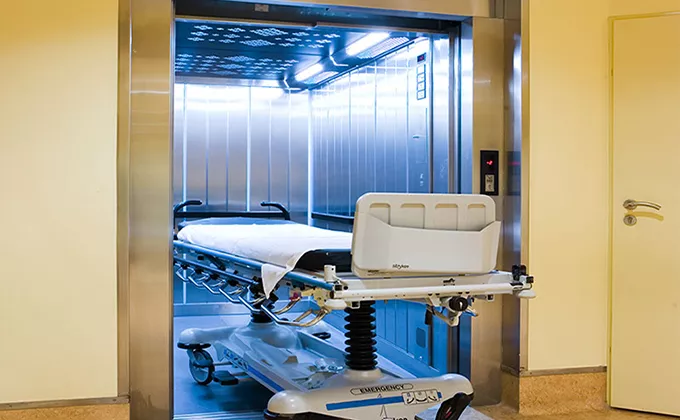
Are you facing operating pressure inside your medical facility and looking for a proven way to choose the best hospital elevators without exposing patients or staff to delays or risk?
Hospital elevators are not typical passenger lifts. They are a core part of the care chain that relies on fast, quiet, and safe transport. One mistake in capacity, cabin dimensions, or safety systems can stall a patient bed transfer, disrupt emergency flow, or create congestion that increases response time.
In this guide, you will learn what makes hospital elevators for medical facilities different, the standard hospital elevator dimensions, the best types and use cases in Saudi Arabia, and how to choose an installation and hospital elevator maintenance Saudi Arabia partner that protects uptime.
Keep reading to make a decision that supports your facility clinically and operationally for years.
Why Are Hospital Elevators Critical for Medical Facilities?
Hospital elevators for medical facilities are a decisive operational element because they connect care departments and enable safe, rapid movement of patients and equipment without interrupting workflows. Their value grows as operating pressure rises and time sensitivity increases in ER and surgical environments.
-
Speed up patient transfers on beds and wheelchairs.
-
Support emergency routes and reduce response time.
-
Move heavy medical devices safely.
-
Reduce congestion between departments and floors.
-
Increase safety and reduce collision and trip risks.
-
Improve the experience for patients and visitors, and reduce staff fatigue.
-
Protect uptime with reliable preventive elevator maintenance plans.
Read also: The Best Freight Elevator Installation Company in Saudi Arabia for 2026
What Are the Standard Hospital Elevator Dimensions?
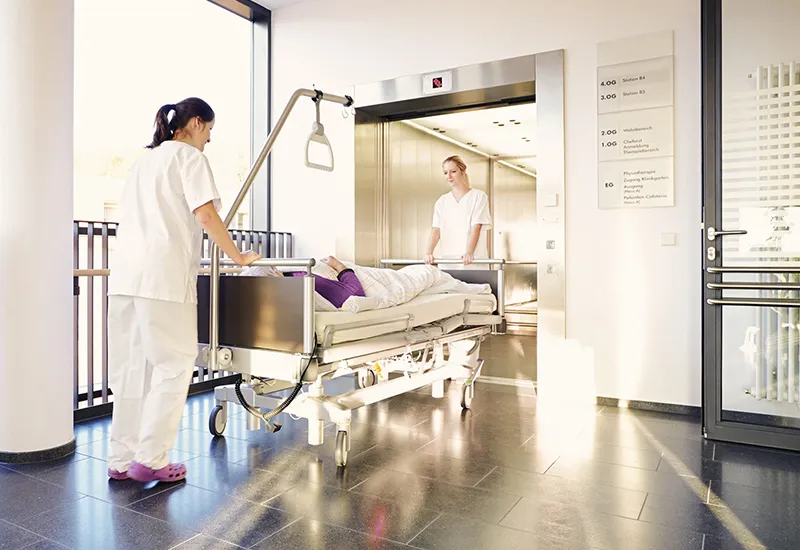
Hospital elevator dimensions are defined by the real operational goal: moving a stretcher or hospital bed with attendants and equipment safely, without rubbing, turning issues, or door interference. That is why bed and stretcher elevators are typically larger than standard passenger elevators.
The most common reference sizes used in medical projects include:
-
Minimum elevator to fit a stretcher: cabin approx. 1100 × 2100 mm.
-
Practical, widely used size for easier hospital bed transport: cabin approx. 1400 × 2400 mm.
-
Clear door opening width: often 900–1200 mm depending on bed type and entry path.
-
Rated load: often 1000 to 1600 kg based on usage density and equipment.
-
Clear door/cabin height: typically not less than 2100 mm to support safe movement inside the car.
Best Types of Hospital Elevators in Saudi Arabia
The best types of hospital elevators in Saudi Arabia depend on how movement is organized inside the facility: patients on beds, visitors and staff, and logistics/service flow. Selection quality increases when you match each elevator type to its real function, rather than relying on a generic label.
Hospital Bed and Stretcher Elevators
This type forms the backbone of patient movement between emergency, operating rooms, ICU, and inpatient wards. It prioritizes a deeper cabin and a wider door to bring beds in smoothly and reduce wall or door-frame contact. It also supports a smoother ride profile that minimizes vibration, protecting patient comfort during transport and strengthening patient transport elevator safety.
Passenger Elevators for Hospitals
These support staff and visitor circulation between clinics, departments, and parking areas with high efficiency, reducing pressure on bed elevators. They are usually selected with practical capacities for peak footfall, precise leveling, and fast, safe doors. When designed correctly, they help reduce congestion and improve internal flow across the building.
Service and Freight Elevators for Medical Supplies
These are dedicated to moving medications, consumables, heavy materials, and equipment between stores and departments without disturbing patient and visitor routes. They reduce operational friction and help separate service traffic from care traffic. They are also a strong choice when daily logistics are dense and require an independent, controlled, and safe route.
Read also: What is the Best Elevator Company in Riyadh for 2026?
Uses of Hospital Elevators
Hospital elevators serve the entire medical facility movement network because they connect sensitive departments through safe, fast transport routes without disrupting care or creating operational confusion. Uses vary by elevator type and service path within the hospital.
-
Transport patients on beds and stretchers between departments.
-
Move wheelchairs and patient companions easily.
-
Support emergency routes and reduce response time.
-
Move medical staff quickly between clinics and floors.
-
Transport medical devices and heavy equipment safely.
-
Deliver medicines and supplies from stores to departments.
-
Move medical waste and linens through a separate service route.
-
Reduce congestion by distributing traffic across patient, passenger, and service elevators.
Read also: How to Choose the Best Restaurant Elevator Installation Company in Saudi Arabia?
How Do You Choose the Best Hospital Elevator Installation Company in Saudi Arabia?
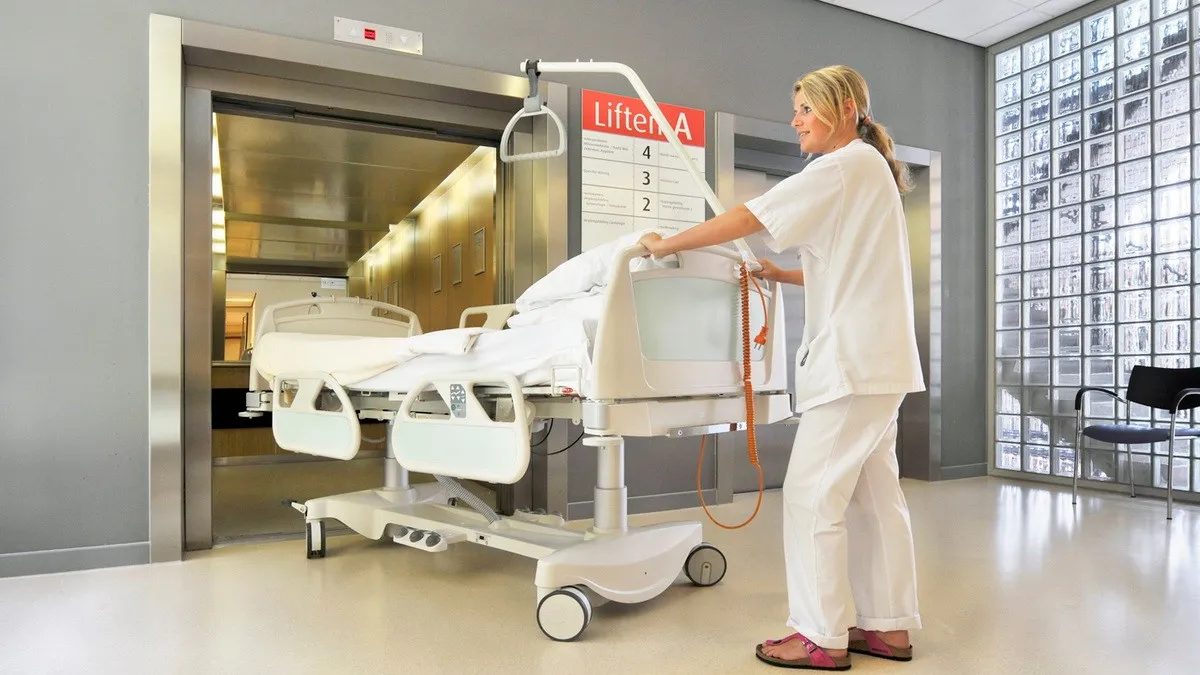
Hospital elevators require a partner who understands hospital operations before quoting a price or recommending specifications. To choose with confidence, focus on the following essentials when evaluating a medical facility elevator installation Saudi Arabia provider.
-
Proven experience in hospital and medical facility projects.
-
Engineering site assessment and route planning for beds and service traffic.
-
Compliance with safety requirements and project-approved standards.
-
Providing the right mix: bed/patient, passenger, and service elevators as needed.
-
High-quality components, clear certifications, and transparent warranty terms.
-
A written preventive maintenance plan with emergency response schedules.
-
Spare parts availability and fast technical support in your city.
-
Formal testing, commissioning, and handover with training for operations teams.
-
Contract clarity: costs, exclusions, and realistic implementation timelines.
-
A verifiable reputation with references and reviews you can check.
Hospital elevators in high-demand facilities also benefit from clear escalation procedures and documented downtime controls, especially where emergency movement cannot pause.
Get Reliable Hospital Elevators with Ejadah’s Elevator Company in Saudi Arabia
Get hospital elevators engineered to perform inside your medical facility with Ejadah Elevators in Saudi Arabia—from engineering assessment through installation, handover, and commissioning. We recommend the right solution for bed routes, staff and visitor traffic, and service logistics, with clear safety standards and a hospital elevator maintenance Saudi Arabia plan that supports continuity without surprise stoppages.
If you need an elevator company in sharjah, Riyadh, Saudi Arabia that strengthens operational quality and improves the experience of patients and visitors, our team is ready to support you step by step. Request a site assessment and get a tailored offer that matches your facility’s real usage.
Hospital elevators should never be selected on name alone. Choose based on cabin size, door clearance, leveling accuracy, emergency readiness, and the maintenance program that keeps your hospital moving.
Ready to upgrade your building’s mobility systems? Contact Ejadah’s elevator company in saudi arabia today.
FAQ About Best Types of Hospital Elevators:
1) What is a hospital elevator?
It is an elevator designed for medical facilities to transport patients on beds/stretchers, wheelchairs, and equipment safely and smoothly. It typically includes a wider cabin, a wider door, smoother ride behavior, and higher safety features than standard elevators.
2) What are the requirements for installing a hospital elevator?
-
Easy bed/stretcher entry (appropriate cabin and door dimensions).
-
Sufficient load capacity for daily operations (patients + companions + equipment).
-
Accurate leveling and safe doors with sensors to prevent closing on users.
-
Effective emergency system (controlled lowering during power loss + alarm/communication).
-
Compliance with the approved code/authorities for the project and a reliable maintenance plan.
3) What are elevator shaft and machine room sizes in hospitals?
There is no single fixed size because the elevator shaft and machine room depend on elevator type, capacity, speed, and the building layout. Many projects are built around bed-ready cabin sizes such as:
-
Common minimum to fit a stretcher: cabin approx. 1100 × 2100 mm.
-
Practical, widely used size for easier bed transport: cabin approx. 1400 × 2400 mm.
The final shaft/machine room dimensions are confirmed by the manufacturer after a site survey and based on approved drawings and coordination requirements.
لا تعليق