

Elevator Sizes: How to Determine the Right Elevator Dimensions?
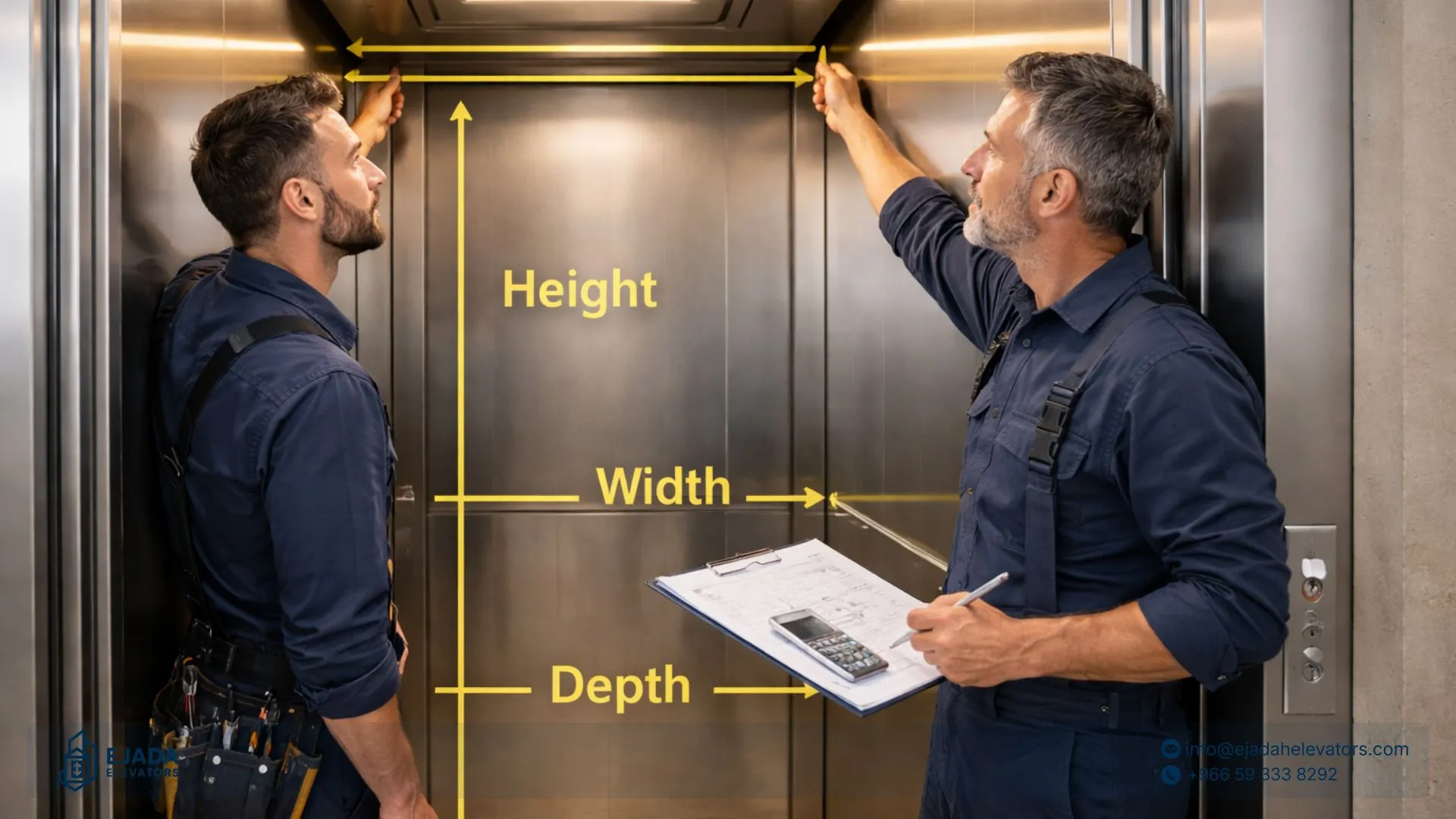
Did you know that choosing the right elevator size is a decisive step for comfort and user safety? Dimensions vary by use case, whether residential, commercial, or specialized applications such as hospital elevator sizes and food lift sizes.
In this article, we cover how to determine a 3-person elevator size and a 5-person elevator size, plus the key factors that shape the best fit. Read on to choose the ideal elevator for your project or home.
Common Elevator Sizes by Type (Approx. Internal Dimensions)
Elevator dimensions differ by usage category, and selecting the right size should be based on how the building will actually use the elevator. Below are common elevator size ranges by type:
Residential Elevator Sizes
Residential elevator cabin dimensions typically range from 1.0 m × 1.2 m up to 1.5 m × 1.5 m, which suits small to mid-sized households. These sizes generally accommodate 2 to 3 people comfortably.
Smallest Elevator Size
The smallest elevator size in the market is often around 1 m × 1 m. This option works well for tight spaces, limited floor counts, and homes where shaft area is the main constraint.
3-Person Elevator Size
A typical 3-person elevator size ranges from 1.1 m × 1.4 m to 1.2 m × 1.5 m. This footprint provides practical standing and movement space, making it a solid choice for smaller families.
5-Person Elevator Size
Elevators designed for five people commonly come in dimensions from 1.4 m × 1.5 m to 1.5 m × 1.8 m. This size is ideal for homes or buildings that need higher capacity without requiring an oversized shaft.
6-Person Elevator Size
A 6-person elevator size often starts at 1.5 m × 1.6 m and can reach 1.7 m × 2.0 m. These sizes suit larger homes and buildings with frequent elevator usage patterns.
Commercial Elevator Sizes
Commercial elevator sizes vary by application and the number of floors served. In general, cabin dimensions range from 1.6 m × 1.8 m up to 2.0 m × 2.2 m to support higher passenger flow or goods movement.
Hospital Elevator Sizes
Hospital elevators are typically larger than residential elevator sizes, starting around 1.7 m × 2.0 m and reaching up to 2.0 m × 2.5 m. These dimensions support transporting patients with medical equipment more safely and smoothly.
Food Lift Sizes
Food lift sizes commonly range from 0.8 m × 1.0 m to 1.0 m × 1.2 m. They are designed for simple vertical transport and are smaller than conventional passenger elevator dimensions.
Read also: Home Elevator Prices in Saudi Arabia 2026: Your Complete Guide
How to Determine the Right Elevator Size Based on Usage
Define elevator size based on your real operational needs to serve the intended purpose. The most important factors to consider include:
-
Expected number of users.
-
Building type (residential, commercial, hospital).
-
Number of floors the elevator serves.
-
Available space for installation.
-
Activities or services linked to the elevator (food, goods, or service movement).
-
Accessibility requirements for people with disabilities.
-
How many people will use the elevator at the same time.
Ejada Elevators: Your Trusted Partner for Buying, Installing, and Maintaining Elevators
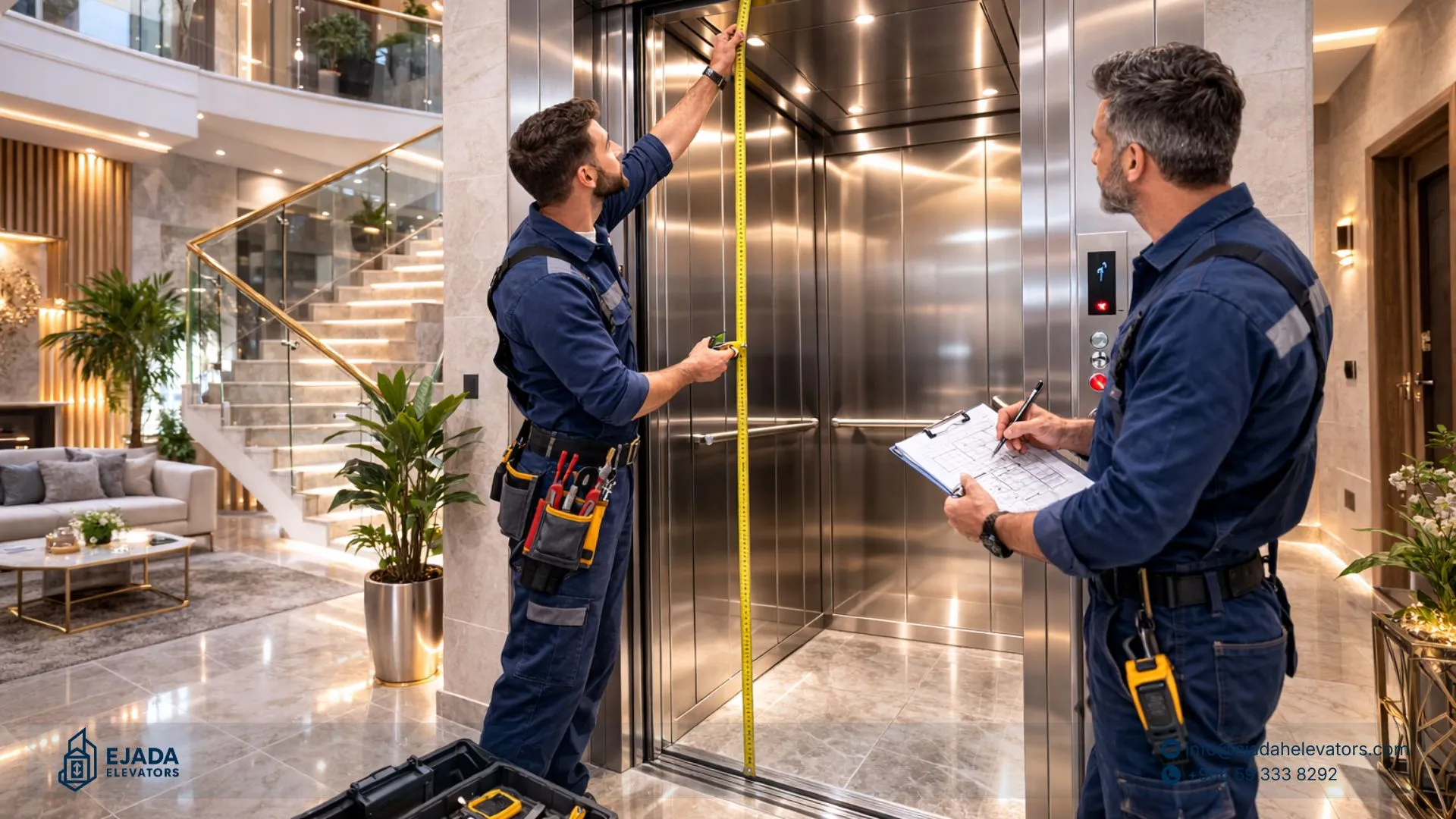
Equip your home or commercial project with the right elevator sizes through Ejada Elevators, your trusted partner for elevator supply and installation. We provide practical, engineered solutions for every need, whether you want compact home elevator sizes, hospital elevators, or food lifts.
With a specialized team and quality-driven service, you can rely on consistent installation standards and dependable maintenance support that protects safety and long-term performance. Contact us today!
Also Read: Importance of 24/7 Elevator Emergency Service and When You Need It?
FAQ About Elevator Sizes:
1- What is the right size for an elevator?
The right size depends on floor count and user volume. Typical sizes range from 1 m × 1.2 m for small residential elevator sizes up to 2 m × 2.5 m for commercial or hospital applications.
2- How do you do elevator capacity calculation?
elevator capacity calculation is based on how many people are expected to ride at the same time. A common planning rule is about 1 person per 0.6 m² of cabin area.
3- How do you calculate how many elevators are needed?
This depends on floor count, building occupancy, and target waiting time. It is usually defined by acceptable waiting intervals and traffic analysis for peak periods.
4- How much space do you need for an elevator?
Required space depends on elevator type and cabin size. Residential elevators typically need at least 1 m × 1 m, while commercial elevators require larger footprints.
5- What are hospital elevator dimensions?
Hospital elevator dimensions often range from 1.8 m × 2.3 m up to 2.0 m × 2.5 m to ensure adequate space for beds and clinical equipment.
6- What is the maximum allowed weight in elevators?
Maximum load varies by type, commonly ranging from about 400 kg for compact elevators up to 2000 kg for heavy-duty commercial or industrial lifts.
7- What factors determine elevator shape and size?
Key factors include usage type, number of floors, required capacity, and the available installation space.
8- What is the thickness of an elevator door?
Elevator door thickness is often around 10 cm to 15 cm, depending on the elevator design and door system specification.
9- What are the fundamentals of elevator design?
Elevator design focuses on safety, energy efficiency, ease of use, and ensuring dimensions fit the building layout and traffic needs.
10- How many amps does an elevator need?
Elevators typically require around 10 to 20 amps, depending on elevator size and the drive system.