
Importance of 24/7 Elevator Emergency Service and When You Need It?
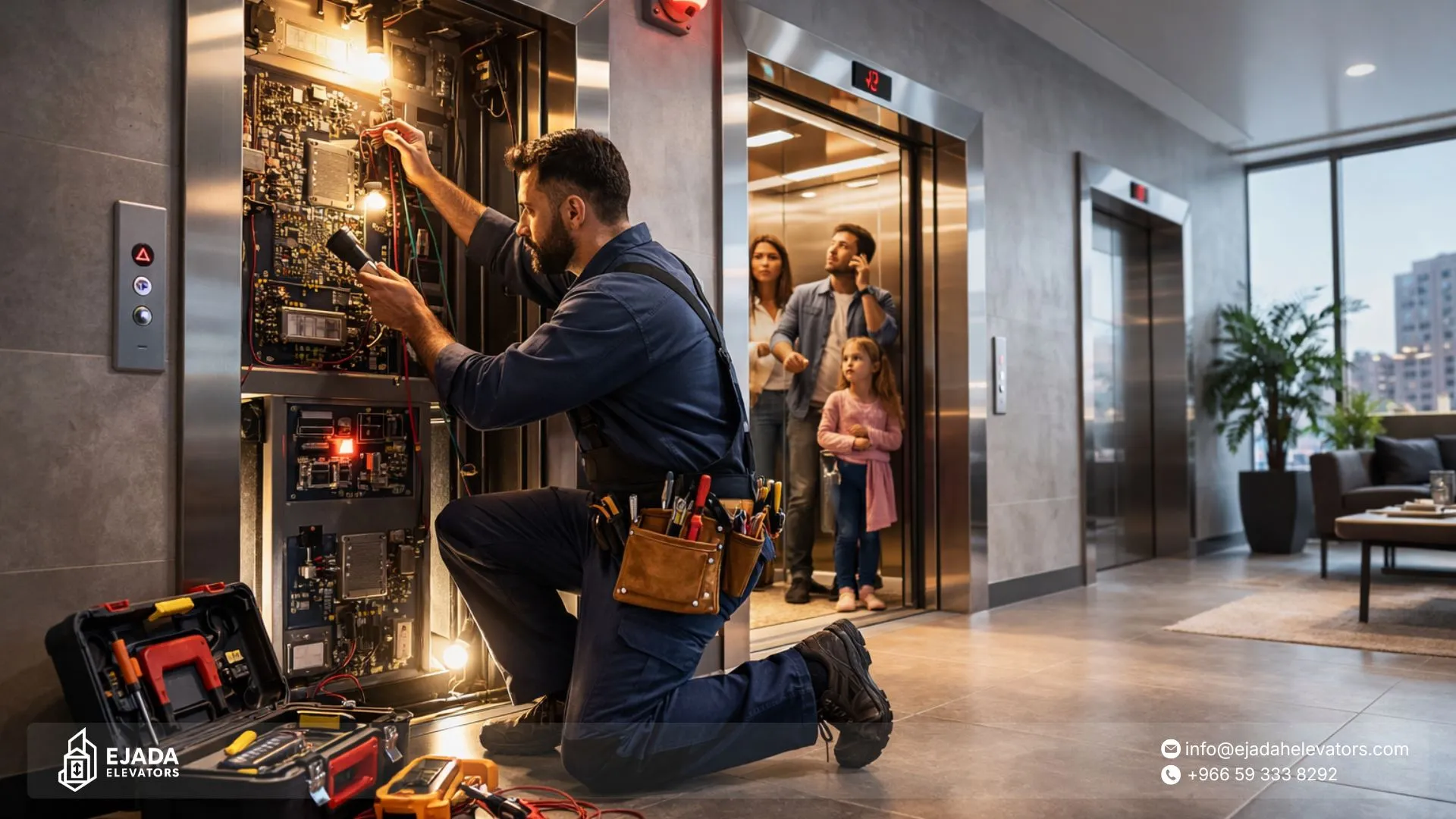
24/7 elevator emergency service is a critical support layer that protects safety and comfort when an elevator suddenly stops or behaves abnormally. Whether the issue is a power outage or an unexpected fault, having an emergency elevator support team helps restore operation quickly and safely.
In this article, we explain why elevator emergency service matters, when you need it, how elevator emergency batteries work, and the key components and technologies used in elevator emergency communication system to deliver a safer, more reliable user experience.
When Do You Need 24/7 Elevator Emergency Service?
24/7 elevator emergency service becomes essential in several scenarios to protect passengers and reduce risk. The most common cases include:
-
Sudden power outage.
-
Fault in the safety system or brakes.
-
Elevator stopping mid-travel between floors.
-
Door faults or incorrect door opening behavior.
-
A person trapped inside the elevator.
-
Failures in the elevator ventilation system.
Read also: Home Elevator Prices in Saudi Arabia 2026: Your Complete Guide
What Is the Role of Elevator Emergency Batteries?
Elevator emergency batteries help keep the elevator safe and controllable when the main power supply fails or when a critical power-related fault occurs. Key functions include:
-
Operating during power failure: Batteries provide enough energy to move the elevator to the nearest floor.
-
Automatic rescue device (ard): Doors can open automatically during an emergency so users can exit safely.
-
Supporting safety functions: Batteries keep essential systems running, such as alarms and emergency lighting.
-
Emergency elevator repair: They provide a safe window to address the fault without exposing users to risk or prolonged disruption.
Read also: What Are the Best Types of Accessibility Elevators for People with Special Needs in KSA?
What Is a Real Fast-Response Standard for Elevator Emergency Service?
A true rapid-response standard depends on clear operational benchmarks that ensure speed and effectiveness when handling elevator faults. The most important criteria include:
-
Time to arrive on-site: Emergency teams should reach the elevator within 30 minutes at most.
-
Immediate call handling: Users should receive prompt response once an emergency call is initiated.
-
Temporary fault recovery: In emergencies, a quick temporary fix should enable safe landing or restore basic operation.
-
Immediate safety actions: Systems must protect passengers by enabling door release or safe landing at the nearest floor.
-
Continuous communication: Passengers should be updated on elevator status and what to do while help is on the way.
Key Types and Components of Elevator Emergency Devices
Elevator emergency communication systems include several devices and modules that support safe operation under abnormal conditions. The most common types and components include:
-
Emergency alarm device.
-
Emergency battery.
-
Emergency communication system.
-
Elevator emergency key.
-
Lighting control unit.
-
Safe landing system.
-
Power-failure operation device.
-
Emergency safety sensors.
-
Automatic rescue device.
Read also: The Best Home Elevator Company in Saudi Arabia (Purchase, Installation & Maintenance)
What Should You Do During an Elevator Emergency?
During an elevator emergency, acting quickly and calmly is essential for safety. Follow these steps:
-
Stay calm: Keep calm and avoid panic.
-
Use the emergency communication device: Call immediately using the in-cabin emergency communication system.
-
Do not force the doors: Avoid opening elevator doors manually, as it can increase danger.
-
Use the emergency key if necessary: If the elevator stops in an unsafe position and an authorized option is available, use it as instructed.
-
Wait for assistance: Wait for the emergency team or responsible staff and avoid random attempts to exit.
Benefits and Importance of an Emergency Device That Operates the Elevator During Power Outage
An emergency operation device is one of the essential systems that helps maintain safe elevator performance during a power outage. Key benefits include:
-
Supplying power to the elevator during an outage.
-
Protecting passengers and moving them to the nearest floor.
-
Maintaining safety functions such as alarm and lighting.
-
Improving user experience and reducing waiting time.
-
Reducing sudden stops and unplanned downtime.
-
Supporting compliance with modern safety requirements.
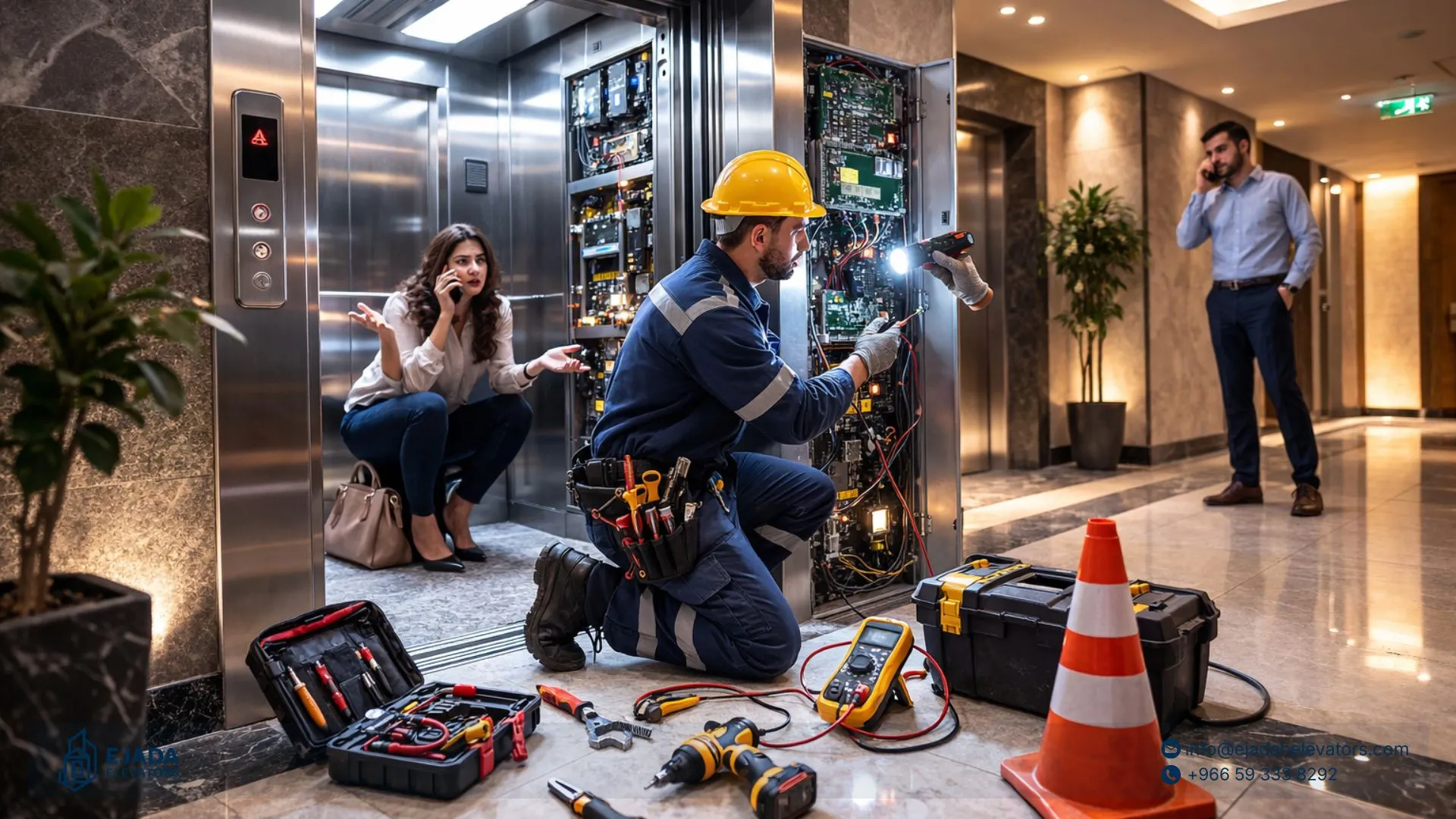
Average Price of an Emergency Device for Elevator Operation During Power Outage
The cost of an elevator emergency device is shaped by several factors that determine the final price. The most important cost drivers include:
-
Type of emergency device used.
-
Device capacity and its ability to operate the elevator.
-
Battery specifications (service life and storage capacity).
-
Brand and manufacturing quality.
-
Installation and technical connection cost.
-
Maintenance costs after installation.
-
Local approval and licensing requirements.
Because pricing varies based on these factors, it is best to request a tailored estimate from Ejada Elevators to ensure the right fit for your elevator’s needs.
Read also: How to Choose the Best Types of Hospital Elevators for Medical Facilities?
Ejada Elevators Among the Best Elevator Companies for 24/7 Emergency Service
24/7 elevator emergency service is only as effective as the team, equipment, and procedures behind it. With Ejada Elevators, you get rapid response and high-quality emergency devices that help keep your elevator operating safely during power outages and unexpected faults.
Do not wait for a breakdown to reveal gaps in your safety plan. Ready to strengthen your building’s elevator readiness? Contact Ejada Elevators today.
FAQ About 24/7 Elevator Emergency Service
1. What is the emergency key in elevators?
It is a key used to move the elevator to the nearest floor during an emergency or after a sudden stop.
2. How do elevator emergency systems work?
They protect passengers during faults by activating emergency lights, audible systems, and alarm functions when needed.
3. What is an elevator emergency key?
It is a dedicated key that can allow door release or controlled stopping during an emergency, based on the system design and authorization.
4. What are elevator faults?
Faults include elevator stoppage, door failures, electrical system issues, or unresponsive buttons.
5. What are elevator fault codes?
Codes vary by controller, but examples may indicate system faults, door issues, or other safety-related conditions.
6. What is the emergency number that opens any device?
This differs by manufacturer and model and is typically displayed on the emergency communication unit inside the elevator.
7. What is an elevator emergency battery?
Elevator emergency battery is a backup battery that supports safe landing, door opening, and essential functions during a power outage.
8. What are elevator safety requirements?
They include safety systems such as alarms, sensors, brakes, and emergency lighting.
9. What do elevator abbreviations mean?
Abbreviations can include direction indicators such as UP and DN to show travel direction.
10. What is an elevator emergency rescue device?
It is a device used to rescue trapped passengers by enabling safe landing and controlled door release during faults.
11. What device moves an elevator to the nearest floor?
It is a system that activates during emergencies to move the elevator to the nearest floor so passengers can exit.
12. Does an elevator need emergency power operation?
Yes. To maintain safety during events like power outages, elevators need emergency power support to run lighting and essential safety systems.